
Key Takeaways
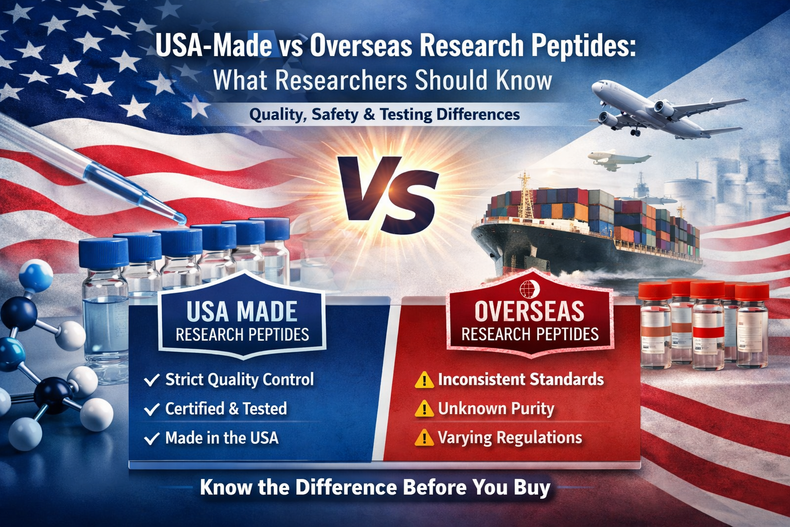
• USA-made research peptides usually offer stronger quality control and traceability.
• Overseas peptides may vary widely in purity and manufacturing standards.
• A Certificate of Analysis (COA) is essential for verifying peptide identity and purity.
• Poor peptide quality can invalidate research data and waste time or funding.
• Reliable suppliers provide transparent testing, batch traceability, and proper storage guidance.
Table of Contents
-
Introduction
-
What Are Research Peptides?
-
Where Do Research Peptides Come From?
-
What Are USA-Made Research Peptides?
-
What Are Overseas Research Peptides?
-
Why Quality Matters in Research
-
USA vs Overseas Peptides: Key Differences
-
5 Reasons Researchers Prefer USA-Made Peptides
-
Real Risks of Overseas Peptides
-
Understanding the Certificate of Analysis (COA)
-
Manufacturing Environment and Quality Control
-
Storage and Shipping Considerations
-
Cost vs Research Value
-
How to Choose the Right Research Peptides
-
How to Verify a Peptide Supplier
-
Common Misunderstandings
-
Understanding Peptide Purity
-
Final Thoughts
-
Frequently Asked Questions
Introduction
Research peptides are used in laboratories across the world.
But not all peptides are produced the same way.
Some are manufactured in the United States, while others are produced overseas.
For researchers, this difference matters.
Small variations in purity, storage, or manufacturing methods can influence experimental outcomes.
This guide explains the differences between USA-made research peptides and overseas alternatives in clear, simple language.
Whether you are a student, scientist, or laboratory professional, understanding these differences helps ensure reliable research.
Simple Definition
A research peptide is a laboratory compound made from amino acids.
It is intended only for scientific research purposes, not for use as a drug, supplement, or treatment.
What Are Research Peptides?
Research peptides are short chains of amino acids.
Scientists use them in:
• Laboratory experiments
• Academic studies
• Biological research
• Educational analysis
• Controlled scientific testing
These compounds are strictly for research use and are not approved medicines.
Because experiments depend on precision, peptide quality is extremely important.
Even small variations can affect results.
Where Do Research Peptides Come From?
Research peptides are manufactured in many parts of the world.
Researchers typically encounter two main categories:
USA-Made Research Peptides
Produced by American companies under domestic manufacturing standards.
Overseas Research Peptides
Manufactured in international facilities, often located in:
• China
• India
• Eastern Europe
• Other global markets
Both types exist in the market.
However, they can differ significantly in quality control, testing transparency, and traceability.
What Are USA-Made Research Peptides?
USA-made research peptides are compounds that are:
• Manufactured in the United States
• Processed in U.S. facilities
• Tested by certified laboratories
• Produced under stricter quality procedures
These factors often provide:
• Greater production oversight
• Clear testing documentation
• Better traceability of materials
This does not mean every domestic peptide is perfect.
But it often means greater accountability and transparency.
What Are Overseas Research Peptides?
Overseas research peptides are produced outside the United States.
Some international manufacturers maintain high standards.
However, quality can vary significantly depending on the facility.
Potential concerns include:
• Limited testing documentation
• Inconsistent purity levels
• Variable storage conditions
• Difficult supplier verification
For scientific research, consistency is critical.
Why Quality Matters in Research
Imagine running an experiment expecting a specific result.
If the peptide used is impure or mislabeled, your data may become unreliable.
Low-quality peptides can cause:
• False experimental results
• Repeated experiments
• Lost time and funding
• Compromised research integrity
Impurities may also affect:
• Peptide stability
• Solubility
• Biological activity
Because of this, many researchers prefer USA-made research peptides with verified testing documentation.
USA vs Overseas Research Peptides: Key Differences
| Feature | USA-Made Research Peptides | Overseas Research Peptides |
|---|---|---|
| Manufacturing Standards | Often stricter oversight | Varies by facility |
| Quality Control | More transparent | May vary |
| Testing Documentation | Detailed COA reports | Sometimes limited |
| Traceability | Easier to verify origin | Can be difficult |
| Batch Consistency | Typically more reliable | May vary between batches |
Consistency is one of the most important factors in scientific research.
5 Reasons Researchers Prefer USA-Made Research Peptides
1. Higher Purity Standards
Domestic manufacturers often test each batch before shipment.
High purity means the peptide contains minimal contaminants, which supports reliable experimental outcomes.
2. Certificate of Analysis (COA)
A Certificate of Analysis is an independent laboratory report showing:
• Purity percentage
• Molecular identity
• Batch number
• Analytical testing methods
Reputable suppliers provide third-party COAs with every batch.
3. Faster Shipping
Domestic distribution reduces transit time.
This is important because peptides can degrade if exposed to heat during long shipping periods.
4. Consumer Protection
Purchasing from a U.S. supplier offers greater legal protection in the event of disputes or quality concerns.
5. Reliable Customer Support
Researchers often need clarification about storage, purity, or testing data.
USA-based suppliers typically provide faster communication and clearer support.
Real Risks of Overseas Peptides
Researchers have reported several issues when purchasing from unverified international suppliers:
• Incorrect concentration levels
• Unknown contaminants or impurities
• Incorrect peptide identity
• Degradation during long shipping periods
• Lack of refunds or accountability
If the starting material is unreliable, the resulting research may also become unreliable.
Understanding the Certificate of Analysis (COA)
A Certificate of Analysis verifies the quality of a peptide batch.
A proper COA typically includes:
• Purity percentage
• Analytical test methods
• Batch identification number
• Date of analysis
• Laboratory verification
With USA-made research peptides, COAs are often easier to verify and linked to third-party testing laboratories.
If a supplier cannot provide a clear COA, it may be a warning sign.
Manufacturing Environment Matters
Controlled manufacturing environments help prevent:
• Cross-contamination
• Chemical impurities
• Handling errors
Facilities with strict procedures maintain:
• Documented production processes
• Clean laboratory environments
• Quality control checkpoints
These factors support research reliability and material integrity.
Storage and Shipping Considerations
Peptides are sensitive biological compounds.
Exposure to heat, moisture, or light can degrade them.
Reliable suppliers use:
• Protective packaging
• Cold-chain shipping when required
• Clear storage instructions
Proper handling helps maintain peptide stability before experiments begin.
Cost vs Research Value
Overseas peptides may sometimes appear cheaper.
However, poor-quality material can require repeated experiments.
In research environments, time and accuracy are more valuable than small cost savings.
Consistent materials reduce experimental uncertainty.
How to Choose the Right Research Peptides
Before purchasing research peptides, consider the following:
• Is the peptide manufactured in the United States?
• Is there a verifiable COA from a third-party laboratory?
• Does the supplier provide batch traceability?
• Are storage instructions clearly provided?
• Is the company transparent about testing procedures?
Reliable suppliers prioritize testing transparency and documentation.
How to Verify a Peptide Supplier
Before purchasing peptides, researchers should confirm:
• The COA is issued by an independent laboratory
• The supplier lists a verified US business address
• Purity levels are clearly stated (often 98% or higher)
• Customer reviews reflect real research experiences
• Shipping and storage procedures are clearly documented
Transparency is one of the strongest indicators of a reliable supplier.
Common Misunderstandings
Several misconceptions exist about peptide sourcing.
• USA-made does not mean approved medicine
• Overseas peptides are not automatically low quality
• Testing transparency matters more than geography
Researchers should always evaluate suppliers carefully.
Understanding Peptide Purity
Purity indicates how much of the product is the intended compound.
A peptide labeled 98% purity means:
98% of the material is the correct peptide.
The remaining 2% may include trace salts or residual solvents.
However, a peptide with 70% purity leaves 30% unknown material, which may affect experimental outcomes.
Always confirm purity through a verified Certificate of Analysis.
Final Thoughts
Scientific research depends on reliable materials.
When comparing USA-made research peptides and overseas options, researchers should evaluate:
• Manufacturing standards
• Testing transparency
• Purity verification
• Storage and shipping procedures
High-quality materials help produce reliable experimental data.
In research, consistency builds confidence.
Choose carefully and verify your sources.
Frequently Asked Questions
Are USA-made research peptides always more expensive?
Not necessarily. When factoring in the cost of failed experiments caused by poor materials, higher-quality peptides can often save money in the long run.
Can I tell where a peptide was manufactured from the label?
Reputable suppliers usually provide a physical address and manufacturing origin. If that information is unclear, researchers should request verification.
What exactly is a Certificate of Analysis (COA)?
A COA is an independent laboratory report confirming a peptide’s identity, purity percentage, and testing results for a specific production batch.
Are overseas peptides ever acceptable for research?
Some overseas manufacturers maintain high standards, but researchers should confirm independent testing documentation and supplier credibility before purchasing.
How does TheraTideUSA ensure quality?
TheraTideUSA provides USA-made research peptides tested by independent third-party laboratories, with Certificates of Analysis available for every batch.
Disclaimer
All products referenced are intended for research use only.
They are not intended for human or animal consumption.
Researchers should follow appropriate laboratory safety and handling procedures.